
Human-AI Relational Theory
Preserving the heart of the therapeutic alliance while integrating AI into counseling, education, supervision, and digital mental health tools in innovative environments.
Triadic Therapeutic Alliance
The triadic therapeutic alliance (TTA) is a new way of thinking about therapy that treats the client, the human therapist, and AI as a connected relational team rather than a traditional two-person relationship.


Triadic Relational Supervision Model
The Triadic Relational Supervision Model (TRSM) reimagines clinical supervision as a three-way relational system between supervisor, supervisee, and AI, rather than a traditional two-person process.
Research, News, & Development
This section highlights ongoing research, publications, and practical innovations emerging from Human-AI Relational Theory and the triadic models developed in this practice, including the Triadic Therapeutic Alliance (TTA) and Triadic Relational Supervision Model (TRSM).

Triadic Therapeutic Alliance (TTA)
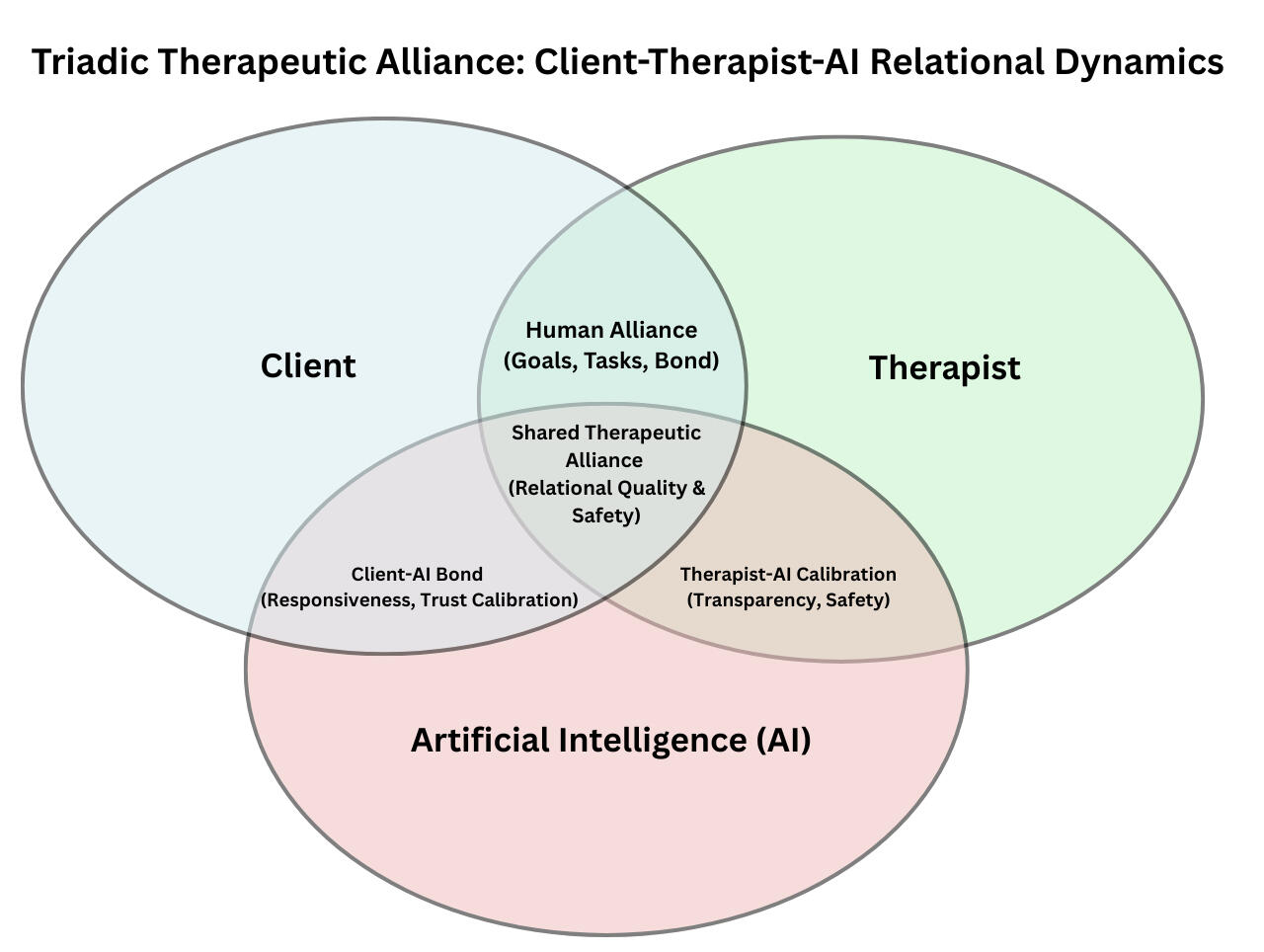
The triadic therapeutic alliance (TTA) is a new way of thinking about therapy that treats the client, the human therapist, and AI tools as a connected relational team rather than a traditional two-person relationship.What TTA Means
In TTA, the therapeutic relationship is understood as three overlapping alliances:Client–therapist: the traditional working alliance of goals, tasks, and bond that remains the ethical and emotional core of treatment.Client–AI: the bond clients may form with supportive tools like chatbots, mood trackers, or digital companions that provide structure, reflection, and between-session support.Therapist–AI: the way clinicians collaborate with AI for assessment, monitoring, and planning while retaining clinical judgment and responsibility.Why It Matters
TTA highlights that:AI should function as an adjunct that enhances access, continuity, and personalization, not as a replacement for human care.Trust, transparency, and clear boundaries are essential so clients understand what AI can and cannot do, and who is ultimately responsible for their care.When coordinated well, the triad can strengthen engagement and outcomes by combining human empathy with smart, data-informed support.
Triadic Relational Supervision Model (TRSM)
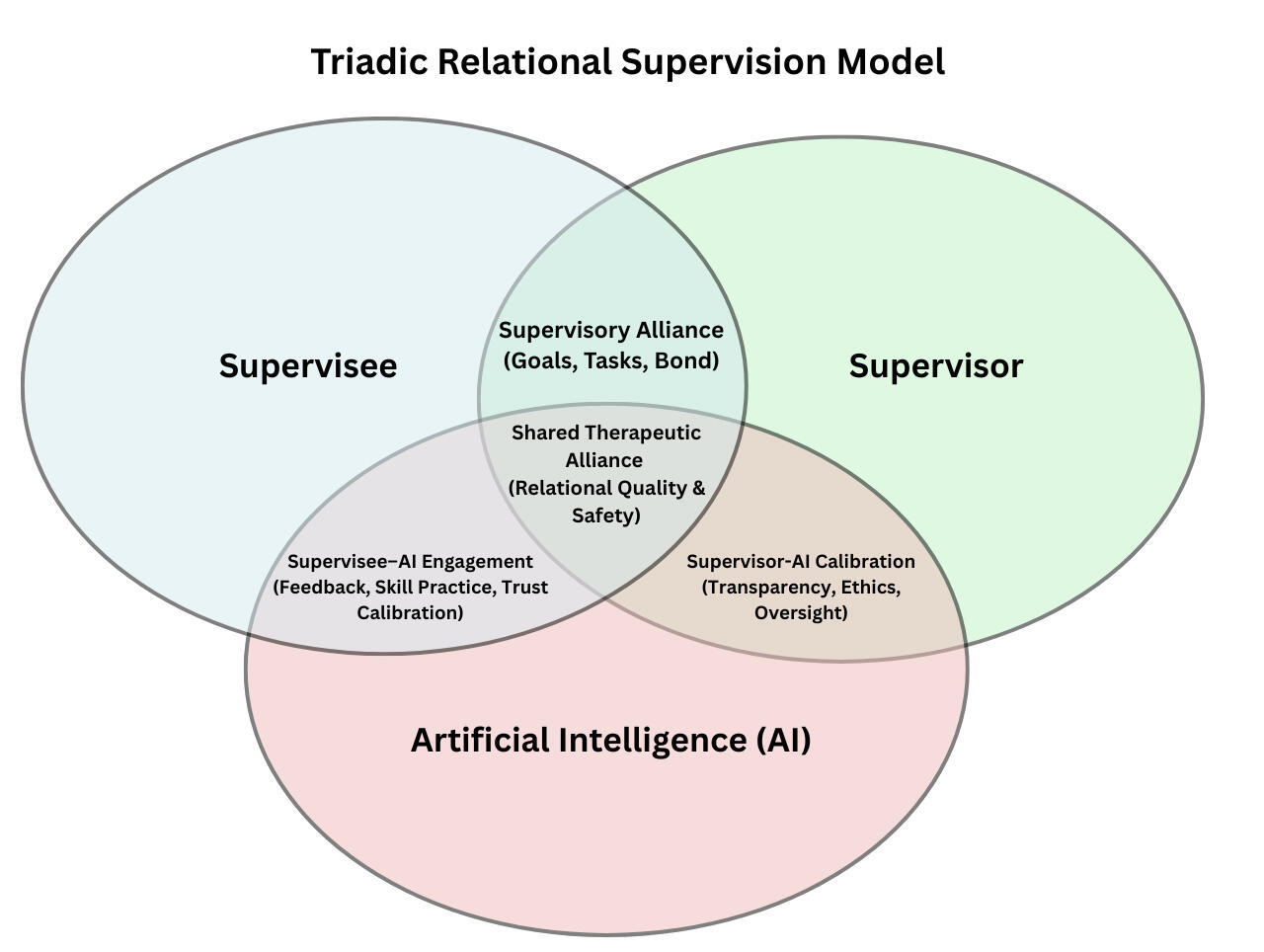
The Triadic Relational Supervision Model (TRSM) reimagines clinical supervision as a three-way relational system between supervisor, supervisee, and AI, rather than a traditional two-person process.What TRSM Is
TRSM frames supervision as three interconnected relationships that all shape learning and safety:Supervisor–supervisee: the core supervisory alliance of goals, tasks, and bond that supports growth, evaluation, and professional identity.Supervisee–AI: the supervisee’s engagement with AI (e.g., simulations, feedback tools, analytics) that can provide structured practice, immediate feedback, and self-reflection.Supervisor–AI: the supervisor’s calibration of AI—understanding its limits, interpreting its data, and integrating it ethically into supervision.Why It Matters
TRSM emphasizes that:Human relationship remains the central foundation of supervision, with AI positioned as an adjunct that supports, not replaces, supervisory judgment and mentoring.Transparency, informed consent, and trust calibration are crucial so supervisees know how AI is used, what is being recorded or analyzed, and how it informs feedback or evaluation.When these three relationships are aligned, AI can enhance supervision by enriching reflection, objectivity, and accessibility while preserving empathy, safety, and ethical responsibility.
Research, News, & Development

This section highlights ongoing research, publications, and practical innovations emerging from the triadic models developed in this practice, including the Triadic Therapeutic Alliance (TTA) and Triadic Relational Supervision Model (TRSM).Research news
Current projects explore how clients, therapists, supervisors, and AI tools form interconnected alliances, with a focus on trust, safety, and ethical AI use in counseling and supervision. Emerging manuscripts and conference presentations examine triadic alliance processes, digital therapeutic alliance measures, and real-world applications of AI-enhanced therapy and supervision.Model development
Ongoing development work is refining TTA and TRSM as practice-ready frameworks, including clinical guidelines, supervision protocols, and training applications for counselor education. Future updates will share new tools, pilot data, and implementation resources as these triadic models are tested, adapted, and integrated into diverse mental health settings.Engage with Dr. Young on Linkedin:
www.linkedin.com/in/spacecounselor